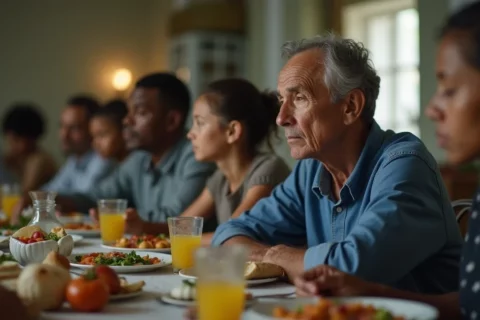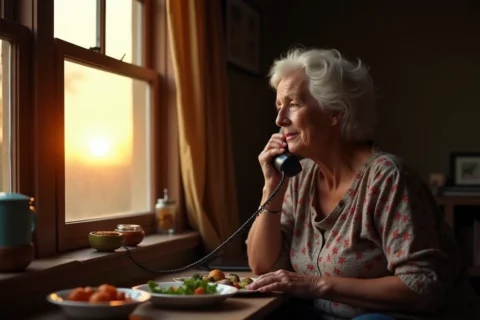

A person can be busy all day on their phone and still have no one they trust with bad news. That gap is the real problem. Messages, reactions, voice notes, and group chats can create a full calendar of contact, but they do not automatically create closeness.
Picture someone active in six WhatsApp groups. They are included, tagged, looped in, asked for updates. From the outside, they look connected. Yet when something goes wrong, they have no single name they would choose first. Modern loneliness hides there, in plain sight and under constant notification.
Visibility is not the same as care
Social reach is easy to confuse with connection because it is measurable. You can count the groups, the followers, the likes, the replies. You can see that people know your name. You cannot see so quickly whether anyone knows your fear, your shame, or the thing you are carrying quietly.
The WHO Commission on Social Connection puts a hard edge on this. It estimates that one in six people worldwide feels lonely. Adolescents and young adults carry a large share of that burden. Its definition is sharper than the usual one too. Loneliness is the space between the connection a person has and the connection they need. Physical isolation is only one possible part of it. A person can be surrounded and still feel underfed.
A crowded phone screen can be a cruel comfort. It keeps relationships moving, but often at a distance. Work, scrolling, background noise, and the low-level performance of always seeming fine break up the pace. A quick laugh reaction is easier than a real question. A thumbs-up is easier than sitting with bad news.
Six groups can still leave a person alone
The person in six WhatsApp groups is not friendless. They probably have social reach, maybe even a wide circle. They may be invited, remembered, and included in the flow of everyday life. But companionship, belonging, and emotional intimacy are different things.
Companionship is the ease of sharing time. It is someone you can call for a banal chat, a drive, a coffee, a walk after work. Belonging goes a little deeper. It is the feeling that you are not on the edge of the room pretending to understand the joke; you are part of the room. Emotional intimacy goes further still. It is the place where you can say, “Something is wrong,” and not have to soften it into a joke or a sticker.
A 2025 study of South African youth found high levels of moderate-to-severe loneliness, with young women particularly affected, even while digital contact stayed constant. That detail matters because it exposes the lie that more connection tools automatically reduce isolation. They do not. They can increase contact while leaving the heart untouched.
The phone helps people reach each other faster, but it also keeps the exchange shallow enough to survive interruption. Messages arrive between meetings. Replies happen while cooking, driving, waiting, half-listening. The relationship becomes a series of fragments. It is visible, yes, but not always held.
Being witnessed feels very different
People often know when they are being noticed. Fewer know when they are being witnessed. Visibility asks for a public version of the self, tidy enough to share and easy enough to skim. Being witnessed asks for the private version, the one that is uncertain, embarrassed, grieving, angry, tender, or tired.
That difference shows up in the body. When someone is merely visible, they may feel watched but not met. When they are witnessed, the nervous system can soften. They do not have to manage the room. They do not have to keep editing themselves mid-sentence. The conversation becomes a place where truth is allowed to arrive in its ordinary clothes.
Spiritual healing language becomes practical rather than abstract here. Many people carry a pattern that says, “Stay pleasant, stay useful, stay light, and you will be kept.” That belief can keep a person popular and lonely at the same time. It can fill their phone while emptying their deeper life.
A session focused on inner change often starts right there, with the recognition that the old pattern is not proof of being loved. It is proof of being adapted. The work is to notice which relationships invite honesty and which ones only reward the edited version.
Choosing people who can hold the real thing
The answer is not to throw away your phone or pretend digital life has no value. It does. People find friends, communities, spiritual circles, and practical support through it every day. The question is simpler and more exact. Which connections leave you feeling witnessed, and which ones leave you merely visible?
A useful way to sort that out is to watch your own response after contact.
- After speaking to this person, do you feel steadier or more drained?
- Can you bring ordinary bad news to them without staging it first?
- Do they ask follow-up questions, or only react and move on?
- Do you feel more like yourself after the conversation, or less?
Those answers point toward the kind of connection that can actually soothe loneliness.
Healing usually begins with one honest relationship, not a dramatic withdrawal from the whole online world. It may be a friend who can handle silence. It may be a sibling who does not rush to fix everything. It may be a counselor, a spiritual practitioner, or a small circle where no one needs to perform well to belong. The point is to build around presence, not publicity.
The deepest shift is often this: stop asking how visible your life looks, and start asking who can stay close when the polished version falls away. That is where companionship becomes belonging, and belonging becomes the kind of intimacy that makes a person feel real again.